
Updated October 2026. Checked against Nebraska Department of Environmental Quality, Cornell Cooperative Extension and InspectAPedia guidance.
Septic tank enzymes are proteins that speed up the breakdown of specific wastes, such as fats, proteins, starches and paper. The bacteria already living in a working septic tank make these enzymes on their own, so most tanks do not need enzyme additives. Nebraska’s environmental regulator says research has shown little benefit from septic additives. If you use one, it does not replace pumping every 3 to 5 years.
What enzymes do in a septic tank
| Enzyme | Breaks down |
|---|---|
| Protease | Proteins |
| Lipase | Fats, oils and grease |
| Amylase | Starches |
| Cellulase | Cellulose, including toilet paper fiber |
| Xylanase | Plant fibers (hemicellulose) |
| Urease | Urea in urine |
Enzymes are proteins, not living organisms. In a working tank, bacteria produce them all the time. An added enzyme speeds up one kind of breakdown for a while, while added bacteria can multiply and produce many enzymes, which is the main difference between enzyme and bacteria products.
Do you need enzyme additives for your septic tank?
For most homes, no. Here is what independent sources say:
- Nebraska Department of Environmental Quality: “Research has shown little benefit to using additives in systems, and therefore they are not recommended.” It also warns against products claiming to eliminate pumping, because they can keep solids suspended so they flow out to the drainfield.
- InspectAPedia: asked whether to add septic chemicals, the answer is “Generally, no.”
- Cornell Cooperative Extension: normal use of household cleaners poses minimal risk to the tank, so there is usually no lost bacteria to replace.
Enzymes will not fix a full tank, a clogged filter or a failing drainfield. If you are dealing with slow drains or odors, find the cause first.
Septic slow or smelly?
Additives will not fix a full tank or a failing drainfield. Talk to a local septic company about pumping or an inspection.
Calls are answered by a pay-per-call partner network that connects you with a local septic company. Calling is free; we may be paid for referrals.
If you still want to try an enzyme treatment
- Choose a product that combines bacteria and enzymes, used at the label dose.
- Do not use any product that says you can skip pumping.
- Keep pumping on schedule: every 3 to 5 years for most homes, per the EPA.
- Compare options in our septic tank treatments guide and our Rid-X review.
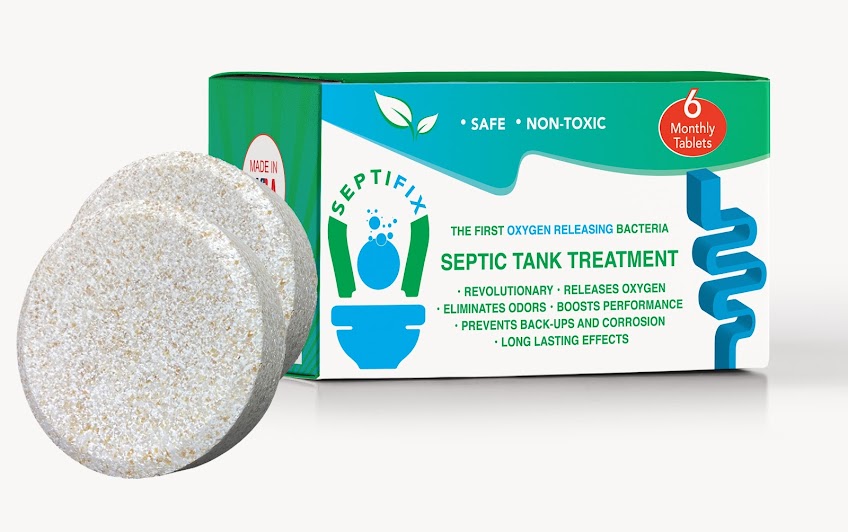
Septifix is one bacteria and enzyme tablet sold online. The maker makes broad claims about reducing sludge; read our Septifix review for what the maker says and what the evidence shows, or visit the Septifix website.
Are enzymes safe for septic systems?
Yes. Enzyme products are biodegradable and do not harm a septic system. The question is whether they help, and for a working system the evidence says little. Overdosing is a waste of money rather than a danger.
Quick answers
Are enzyme laundry detergents septic safe?
Generally yes. Enzymes in laundry detergent break down stains and are biodegradable. See the best laundry detergents for septic systems.
Enzymes or bacteria: which is better for a septic tank?
Bacteria products keep working as they multiply; pure enzyme products work only briefly. A healthy tank already has both.
Can you put too many enzymes in a septic tank?
It will not harm the tank, but more than the label dose adds cost without benefit.
Sources
- University of Nebraska-Lincoln Water, Domestic sewage FAQs (citing Nebraska DEQ)
- InspectAPedia, Drainfield restoration methods
- Cornell Cooperative Extension, Household Chemicals and Your Septic System
- U.S. EPA, How to care for your septic system