
Updated October 2026. Product details are the manufacturers’ own claims; we have not lab-tested these products. As an Amazon Associate we earn from qualifying purchases, and some links below are sponsored.
The best septic tank treatment is regular pumping and keeping the wrong things out of your drains. Health agencies say a working septic tank doesn’t need an additive. If you want one anyway, choose a biological product (bacteria and enzymes, no harsh chemicals) dosed for your tank size, and skip anything that claims you’ll never need to pump again. Below are 8 popular treatments compared, plus how to choose.
Do septic tank treatments work?
Your tank already has the bacteria it needs; they arrive with every flush. That’s why the Georgia Department of Public Health says additives aren’t beneficial to septic systems and will never eliminate the need for regular inspection and pumping. University of Missouri Extension researchers point to findings that additives may shorten a tank’s recovery time by about an hour, which they call not a significant improvement, and warn that products promising to end pumping usually just move solids to the drainfield.
Biological treatments are generally low-risk. Missouri Extension notes they’re unlikely to pollute groundwater. Some owners use one after heavy use of cleaning chemicals or simply for peace of mind. Just treat it as an extra, never a substitute for pumping every 3 to 5 years as the EPA recommends.
Septic tank treatments compared
| Treatment | Type and dose (maker’s claims) | Worth knowing |
|---|---|---|
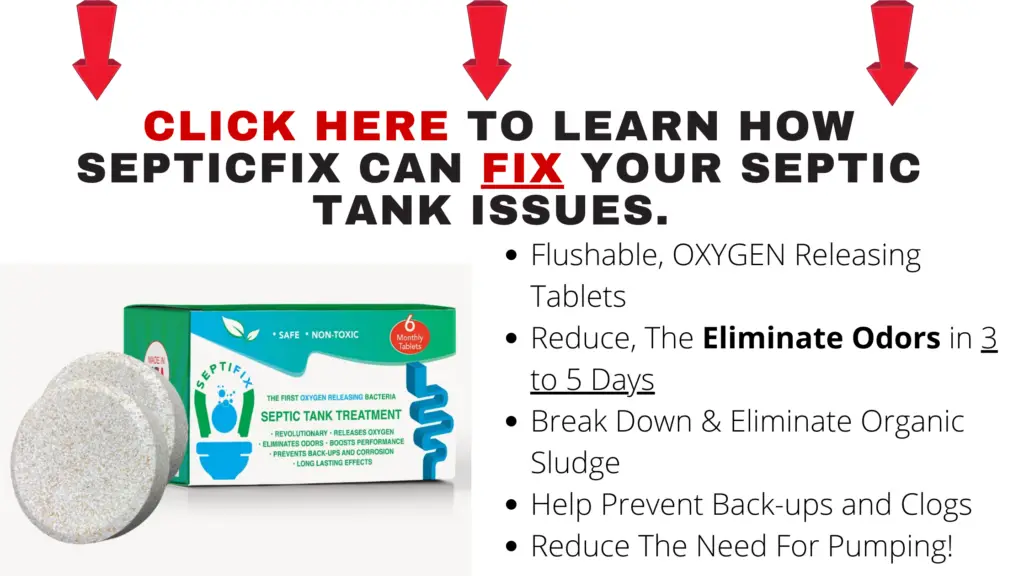
| Septifix | Tablets you flush down the toilet; the maker says they release oxygen and digest sludge | Sold through the maker’s site, not Amazon. Read our Septifix review before buying. (Sponsored link) |
| Rid-X Septic Tank Treatment | Monthly pouch of bacteria and enzymes for 700 to 1,500 gallon tanks | The best-known brand and easy to find in stores. See our Rid-X guide |
| Cabin Obsession Septic Tank Treatment | Monthly packet of live bacteria; 12 per pack | Maker suggests two packets a month for homes with four or more bedrooms or tanks over 1,000 gallons |
| GreenPig Solutions 52 | One packet every 3 months for 500 to 1,500 gallon tanks | Low cost per year because of the quarterly dose |
| Green Gobbler Septic Saver | Monthly bacteria and enzyme pack; 6 per bag | Widely available; budget for two bags a year |
| Walex Bio-Active Drop-Ins | Monthly drop-in packet for tanks up to 1,500 gallons | Can leave residue in the bowl, so use it before cleaning the toilet |
| Bioflush Natural Septic Treatment | Monthly packet sized for 1,000 gallon systems | Maker says it can also be mixed with water and poured into sink and shower drains |
| Instant Power 1868 Septic Shock | One 2-liter bottle of bacteria and enzymes poured in at once | A one-time “shock” product rather than a monthly treatment |
Prices and formulas change, so check the current listing and dosing for your tank size before you buy.
How to choose a septic tank treatment
- Biological only. Look for bacteria and enzymes on the label. Avoid products based on solvents, strong acids or caustic chemicals.
- Matched to your tank. Most packets are sized for roughly 1,000 to 1,500 gallons. Larger tanks or busy households may need a double dose.
- A simple schedule. Monthly packets are the most common; quarterly products cost less per year.
- Honest claims. “Helps break down waste” is reasonable. “Eliminates pumping” or “fixes a failed drainfield” is a red flag.
- Cost per year. Compare the yearly cost against setting that money aside for your next pumping.
Septic problems a treatment won’t fix?
Backups, soggy ground over the drainfield, alarms or strong odors need a septic company, not a product. Talk to a local pro.
Calls are answered by a pay-per-call partner network that connects you with a local septic company. Calling is free; we may be paid for referrals.
What does more for your tank than any treatment
- Pumping every 3 to 5 years and an inspection every 3 years, per the EPA; see how often to pump a septic tank
- Flushing only waste and toilet paper; see why wipes are a problem
- Using everyday cleaners in normal amounts; see our list of septic-safe products
- Spreading laundry across the week and fixing running toilets
- Keeping grease out of the kitchen drain and limiting the garbage disposal
For natural, no-cost habits, read how to clean your septic tank naturally.
Quick answers
What is the best septic tank treatment?
For most homes, none is needed. If you want one, a monthly biological product sized for your tank, such as the ones above, is the sensible choice. No product replaces pumping.
What is the most natural septic tank treatment?
Your tank’s own bacteria. Protect them by keeping harsh chemicals, medicines and large doses of bleach out of the drains, and they do the job without help.
Can a septic treatment fix a failing drainfield?
No. A drainfield that is soggy, smelly or backing up needs a professional inspection. Read about restoring a drainfield.
Do I need a treatment after the tank is pumped?
No. Pumping leaves some sludge behind, and new bacteria arrive with normal use. See what to do after your tank is pumped.
Sources
- Georgia Department of Public Health, Additives and your on-site sewage management system (PDF, checked October 2026)
- University of Missouri Extension, Septic tank additives debated (PDF)
- U.S. EPA, How to care for your septic system